
The importance of putting yourself first
By Lusanda Mjekula
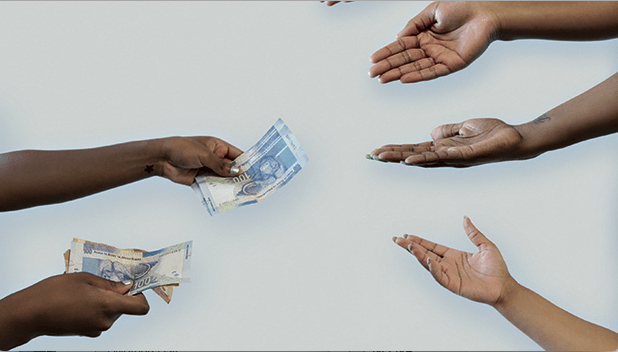
This term ‘black tax’ is recent. In the olden days, helping out extended family members who are not as fortunate was not described as ‘black tax’ but it was described as Ubuntu. There is this misunderstanding of supporting the less fortunate as ‘tax’. However, those who can help, should. Nowadays, black tax is defined as a burden or a responsibility of helping out family members who are not fortunate. Black tax has always been affecting most people, some people can talk about it and others are not as comfortable.
Most young black South Africans, who have started working as well as those who have been working, have always had the pressure to pay back and support their families. Many parents have done all they could to send their children to school to get a decent education. Most of these young people feel indebted to their parents because of all the sacrifices that their parents made. Kanyisa Ncemane who is a General Manager: Customer Solutions at Old Mutual Personal Finance, was in a talk show with Azania Mosaka on 702FM she said that “many young people cannot avoid paying black tax, however, they can learn to manage their finances in a way that helps them to support their families without ignoring their own financial needs and goals”.
Zikhona Mkonjeni (26), a grade 3 English teacher at Cebelihle Lower Primary School, has only been working for over a year and already she feels the financial pressure at home. I have asked her how she feels about this concept or rather how she feels regarding this topic and she said “Black tax is one of the most emotional subjects for many, including myself. It is draining emotionally. I feel like it is selective, I bend backward trying to please everyone at home. I have siblings that earn more than I do but when they decide to help out my parents seem to forget that I have always been helping out”. She continued “In a way, it has affected my growth because I haven’t been able to buy some of the things that I have promised myself I would buy. Black tax comes with so much emotional blackmail, there are times where I would not speak with my mother”. She concludes “I hope we are the last generation to go through this trauma, I hope our children won’t have to do this. I hope they will have financial freedom unlike us”.
Miss Mkonjeni is trying by all means to accept this responsibility of taking care of her family even though it can be overwhelming for her. Her other financial needs are on hold because of this responsibility of taking care of her family. However, she acknowledges that were are living in a society where we are not equal and she understands that she needs to take this responsibility so that the next generation will not face this reality. She believes that she is not the only one facing this reality.
There is a research that was conducted by 10X Investment Retirement Reality Report (RRR19) and this research confirmed the evidence that a higher proportion of South Africa’s economically active is the black population, it confirmed that black population continues to find themselves in a difficult financial state, with a little chance of having any savings compared to other races. This research also confirmed that about 79% of respondents in the Brand Atlas Survey felt unsure about their financial situation or they considered themselves to be doing badly financially, while about 68% claimed to have an additional financial burden of supporting their families. Mabetha Cedric Pila, a business development manager at 10X investment, said that a lack of financial education is costing many dearly, particularly as they struggle under a load of black tax.
The Black tax makes it hard for most South Africans to build generational wealth as many South Africans don’t have the same advantage to build generational wealth. Many black professionals make good money but above anything else, they have to make sure that everyone is taken care of at home. Most black South Africans believe that it is natural to help out financially when you are able, most of them believe that they should help out because of their culture and that it has nothing to do with guilt. Often at times, the black tax makes it hard for most young people to be able to save or even invest long term.
For most young people, it can be difficult to balance between the expectations of your family and one’s needs. Nicolette Mashile is a financial literacy educator, she teaches financial literacy through her social media platforms. She is also a founder of Financial Bunny, which is a platform she uses to educate her viewers. Nicolette uploaded a short video on YouTube that educates viewers on black tax. She gives out pointers on how to deal with black tax. She says ‘black tax is not in other people but you, you are the one who feels taxed because you allow people to take advantage of you. We are grown, therefore we shouldn’t let people take advantage of us”. She continues “you shouldn’t put yourself through many struggles just to assist other people and later complain about it. One thing you can learn for yourself is that, if you are going through black tax and you know that you can’t handle it, learn to say no”. She concludes “only help people when you can help and when you are in good financial standing. Have Ubuntu towards yourself, put yourself first, and only help when you can help”.
It is important to be discreet about your salary, not everyone is obligated to know your income, it is yours and it is important to keep it that way. Try by all means to set ground rules regarding what you can pay for and learn to stick with that. It is important to say no, especially when you cannot afford to help out. Don’t get into debt trying to please your family, otherwise, you will forever be in debt. Do not live beyond your means and get into debt all in the name of ‘superhero’. Always make sure that you put yourself first on your priority list, remember you come first. It is important to have a monthly income budget, that way you will always be able to manage your finances.
To conclude, it is important for young people to understand what black tax is, that way they will be able to deal with the pressures that come with it. It is important to understand it, that way most South Africans will be able to break this cycle of black tax. It is important to get an understanding of what it is and how we can turn it into a positive thing

 The Golden-Girl Blog