This term ‘black tax’ is recent. In the olden days, helping out extended family members who are not as fortunate was not described as ‘black tax’ but it was described as Ubuntu. There is this misunderstanding of supporting the less fortunate as ‘tax’. However, those who can help, should. Nowadays, black tax is defined as a burden or a responsibility of helping out family members who are not fortunate. Black tax has always been affecting most people, some people can talk about it and others are not as comfortable.
Most young black South Africans, who have started working as well as those who have been working, have always had the pressure to pay back and support their families. Many parents have done all they could to send their children to school to get a decent education. Most of these young people feel indebted to their parents because of all the sacrifices that their parents made. Kanyisa Ncemane who is a General Manager: Customer Solutions at Old Mutual Personal Finance, was in a talk show with Azania Mosaka on 702FM she said that “many young people cannot avoid paying black tax, however, they can learn to manage their finances in a way that helps them to support their families without ignoring their own financial needs and goals”.
Zikhona Mkonjeni (26), a grade 3 English teacher at Cebelihle Lower Primary School, has only been working for over a year and already she feels the financial pressure at home. I have asked her how she feels about this concept or rather how she feels regarding this topic and she said “Black tax is one of the most emotional subjects for many, including myself. It is draining emotionally. I feel like it is selective, I bend backward trying to please everyone at home. I have siblings that earn more than I do but when they decide to help out my parents seem to forget that I have always been helping out”. She continued “In a way, it has affected my growth because I haven’t been able to buy some of the things that I have promised myself I would buy. Black tax comes with so much emotional blackmail, there are times where I would not speak with my mother”. She concludes “I hope we are the last generation to go through this trauma, I hope our children won’t have to do this. I hope they will have financial freedom unlike us”.
Relationships are defined in different ways by different people, but it needs a few key ingredients to be healthy. It is easy to be in a relationship, but it is difficult to sustain a stable relationship. Often, love is not enough to sustain a stable relationship.
Dr. Shelley Sommerfeldt, a licensed clinical psychologist and the founder of the Loving Roots Projects, a relationship coaching site said that “most couples fall into a comfort zone and typical routines with their partner. While this provides us feelings of safety and security in our relationship, it can reduce feelings of excitement, spontaneity and overall newness that brings a spark”
Photo from google
Not only can you maintain a successful relationship with your partner by doing the 7 things that were recommended by Dr. Shelley who is an expert to strengthen your partnership, but you will also prove that you are willing to work for one.
Talk to one another
When you begin to develop feelings for someone, you want to know more about them so you make a concerted attempt to engage in conversations. Naturally, the commitment decreases the longer you are in a relationship. Sommerfeldt said that “we may not be as attentive at times, later in relationships and this can come off to our partners as dismissive and uncaring. Be sure to make time to talk to your partner to improve that love in the relationship”. Sommerfeldt further stated that “being present and aware will give a message of care and devotion to your partner”.
2. Do something new with your partner
Relationships continue to grow, particularly when the involvement is still fun and exciting. For a healthy relationship, one of the most important aspects is to have fun together. Doing something new and exciting with your partner in your relationship can spice things up. Sommerfeldt said that “while routines are helpful and make the relationship comfortable and certain, having new and exciting experiences can encourage enthusiasm and much-needed change”.
3. Show affection
Sometimes it is not enough just being loved, it needs to be proved. Physical intimacy such as holding hands, hugging or kissing helps alleviate tension, improves mood and is related to higher satisfaction with the relationship. Feelings like love have to be expressed regularly. If you take it for granted and don’t take time to express it on a regular basis, it will be lost forever. So be a better partner and show your partner love as much as you can. Start with something that feels natural, whether it is holding hands while watching television or even giving each other kisses here and there.
4. Show appreciation
One of the important keys to a good relationship is appreciation. There can be a lot of things that your partner does in your relationship, it can be anything from fixing you a plate when you come home hungry or even repair things around the house. There is no reason you wouldn’t be thankful for things like this, the key point to improve your relationship is by saying you are clearly grateful. Continue to enjoy a genuinely rewarding relationship with your partner. If you are not sure where to start, just praise your partner by saying “you look amazing today” or “thank you for your presence in my life”
5. Forgive one another
“Arguments and differences of opinion in a relationship are common. They also do not show themselves during the honeymoon period because we do not usually have critiques or negative opinions towards our partners at that stage”, said Sommerfeldt. But once the fighting begins, anger and bitterness towards your partner can be easy to build on. It is important to organize your thoughts, sit down your partner and tell them how you are feeling, be honest about your feelings. If you have difficulty in expressing how you feel or your partner does not seem to be able to come with solutions to your problems, it might be time to consider talking to a professional.
6. Apologize when you are wrong
No one likes being wrongly accused and most people don’t want to apologize for something they haven’t done. The thought of apologizing when we have done something wrong, or worse when we are in the right place, causes our blood to boil. We become angry, aggressive, or otherwise lash out, none of which is doing anything to improve the situation. Even though you are not guilty, there is a time and place to apologize. Recall that apologizing is not an expression of guilt, it is an expression of taking responsibility. You are taking responsibility to change and step beyond the current situation. If you value the relationship more than just being right, then it is okay to apologize.
7. Shake up the sex routine
You’re most likely to get to know your partner sexually at the beginning of your relationship, so it will seem like a book, and you are going to be more open to switching things up between the sheets as you get more acquainted with each other. But when you are in a relationship for some time you can get so relaxed with the way you usually do it, to a point where you will stop looking for ways to spice things up. Sommerfeldt clarified that “it can be useful to shake up your sexual routine by trying new positions, changing places you normally have sex or try something else like candles, romantic music, sex toys or massage oil”. Changing your usual pattern will bring some of the honeymoon fun back while giving you a boost to your intense relationship.
One of the greatest gifts the world can ever offer is meeting someone amazing and getting the chance to be with them. A great partnership does not just happen, it requires two people who are willing to work for it.
People have always relied on print media for decades. Newspapers provide up-to-date reporting, business advertising, and happenings around the world. The newspaper industry has always been gradual. Also, its circulation has declined dramatically in recent years. But is print media dying? Do people have less interest in their surroundings and activities around the world? The response is no, people still want news, just as much, if not even more than they did 100 years ago.
Technology evolution appeared to be a good start for print media, but unfortunately, for many reasons, it does not come to close to the effect and connectivity of digital media. The problem began with the radio industry that dropped when the television emerged in the 1950s. Newspapers as well as magazines have adapted and developed to ensure that the print media is not fading. The Audit Bureau of Circulations (ABC) of South Africa conducted a study and confirmed that the newspaper circulation statistics for July-September 2017 had declined by 1.5 percent during the first quarter of the year. This report also confirmed that the newspaper circulation had dropped by 6% in 2016.
Additionally, there was a study that was conducted by ABC, ABC reported that the magazine sale figures dropped in Q4 of 2018 by 8.4%. This study also reported that there was a substantially poor shrinkage in magazine publications such as Marie Claire in South Africa and Destiny and Elle due to the insolvency of Ndalo Media. Also, the circulation of newspapers hasn’t well, this is according to the report by the ABC and, there is still a continuous decrease of 49% in circulation over the past decade as the Times newspaper is already withdrawn in print media and not to mention the growing concern that reporting has been reduced to tabloids, ensuring viewers that they must handle more fake news than ever before.
Reuters Institute Digital News conducted a study in 2019, the report confirmed that there’s a continuous decrease in the consumption of news in print media. South African consumers are more and more focused on digital media to get their news. In the 1990s, the very first hint of trouble became noticeable, if the classified section of newspapers had collapsed. During the olden days, weekend newspapers were as big as catalogs with advertisements, sale updates as well as pieces of property. The introduction of Gumtree, OLX and other online classified sites changed everything for the newspapers. From the mid-1990s to the early 2000s, there was already a lifeline. Some of the grocery shops such as Pick and Pay and Checkers to name a few still preferred newspapers.
It is also clear that digital media is even more user friendly and it allows people to engage, share and express their opinions much more. Most of the time, readers don’t have the patience to wait for a complete article, social media access makes it easier for those people who are dying to get news. However, it is more likely that the younger generation will move away from print media as this young generation prefers for instant news, connectivity as well as entertainment. Most young people have smartphones, and they are mostly likely to have social media platforms. Generally speaking, eye-catching images, combined with videos and captions draw and hold the interest of modern-day teenagers, even more than print media.
Social media platforms such as Twitter, Facebook, and WhatsApp to name a few, are actively exchanging easily accessible pieces of information. Additionally, there is still a premium to pay for a newspaper compared to social media or digital media, while online news is free. There isn’t always easier access to newspapers, but there can always be access to a car radio, a cellphone, or even a laptop to get the latest news and necessary information such as maps, medical facilities as well restaurants guides. The big newspaper companies focus on the digital environment, there are others who largely depend on the print format. Digital journalism has changed the world of media. It helps readers to access information instantly.
News reporting in print is not fading away even though it can be called old school, but there is always news that can be published in print form as well as on magazines, there are still loyal clients that prefer newspapers. The local media environment is changing at a faster rate, it is important to take an approach of old-meets-new. Over 100 years ago, newspapers were the only source of news, therefore advertising in one made so much sense because this was the only way in which people could get information. However, people are continually looking for bigger and better, faster, and more relevant news at a lower rate.
Social media is responding to the death of Asithandile ‘Kwasa’ Lugalo. The murder of Kwasa has triggered an outcry on social media. Calls have been made on social media platforms for Kwasa’s justice, who reportedly died after her ex-boyfriend stabbed her three times. The #JusticeForKwasa has been trending on Twitter and Facebook.
Photo from Facebook
Mass media has reported on the 18th of August 2020 the violent assault of Asithandile ‘Kwasa’ Lugalo by her ex-boyfriend, Viwe Rhulumeni (22). Kwasa was studying Biology at Wits University. Dispatch Live reported that her uncle, Simo Lugalo, said his niece was stabbed in front of her 10-year-old and 20-year-old cousin. Simo continued and said that when this happened, his sister was still at work and she when she returned she saw her daughter covered in blood. Simo believed the wounds of Kwasa were too deep. He confirmed to DispatchLive that the doctors were unable to treat her because she has a fatal blow that killed some of her arteries.
According to Kamva Cwayita Rini, who is one of her friends, Kwasa tried to get out that toxic relationship as they have always encouraged her to do, but because of the masculine in men and the justice system that is forever failing now she is late. Also one of her close friends, Amzo Mbopha, said that Kwasa told him that she went to talk to Viwe’s family about his abusive behavior and the family advised her to stay in that relationship for her safety. He continued “Viwe’s family was aware of his abusive behavior, they asked Kwasa to stay in that relationship for her safety” this is according to Amzo. He concluded “I told her on the 18th of August to open a case thinking that the police will be useful, she said she went to the police station with her mother and she is no more. The justice system continues to fail us”
It is believed that Kwasa was an activist of the #AmINextMovement which began after the death of Uyinene Mrwetyana in August 2019. There was a post that was trending on Facebook a few days before the death of this young woman. The post was about how the abusers apologize to their victims, and she commented “I do all these things because I love you” apparently it is what the suspect used to say to her after physically abusing her, and she later commented “I was almost part of the stats of women killed by men”.
Kwasa’s death brought attention to the likes of Mbuyiseni Ndlozi who serves at the top of leadership structures of EFF and as the National Spokesperson for the party. Ndlozi tweeted on the 19th of August about how shattered he is on the news he received about the #AmINext activist and leader, Kwasa. The South African Miss Universe 2019, Zozibini Tunzi, also shared her grievances on Twitter about the death of this young woman. According to Tunzi, Kwasa was a friend of her sister, she was a joy to her and her family and she later offered her condolences. Also, the MEC Siphokazi Luthuli visited the family of Asithandile to extend her heartfelt condolences.
TimesLive has shared how the family is devastated and is struggling to come to terms with the violent act that has taken place. “My 19-year-old cousin was stabbed three times by her ex-boyfriend and she passed away, because he couldn’t accept that the relationship is over. What is wrong men” this is according to one of her cousins who posted on Facebook. Most women on social media are frightened by these violent acts against women, they have shared their grievances and stated that the law is not on women’s side and that continues to be the problem. Most women on my Facebook account feel like the justice system is failing.
Charlene Beukes, the Director of the Wits Gender Equity Office, shared her heartfelt condolences to the late Kwasa’s family and friends. She said to the reporters of IOL that “The University condemns all forms of gender-based harm. The loss of a young life is one too many, our hearts and prayers are with her family, friends, and those who knew Asithandile. May she rest in peace”.
Photo from Facebook
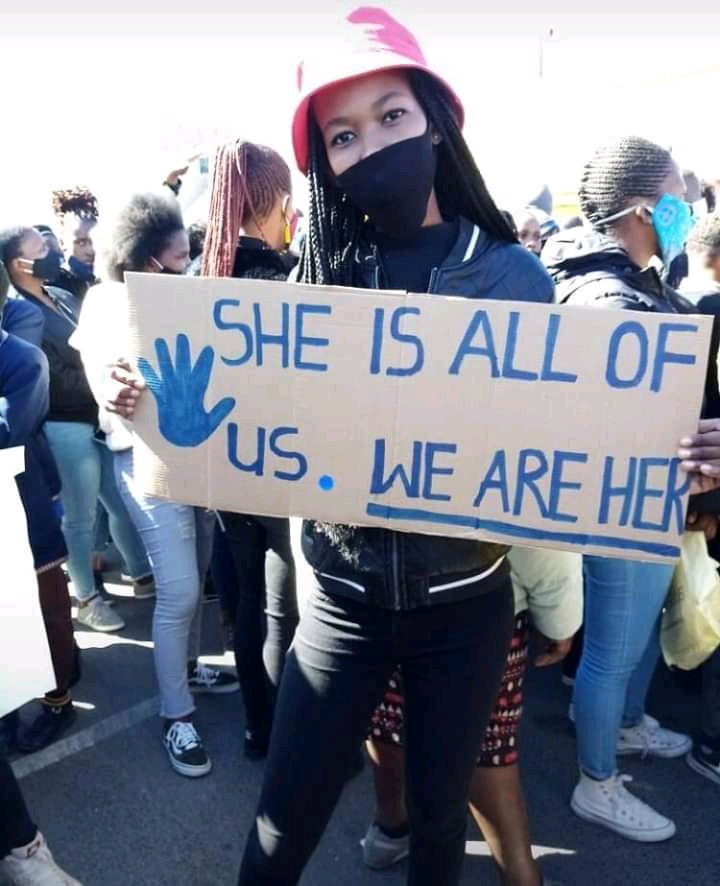
The community of Idutywa has taken the fight against gender-based violence to the streets. Most South Africans are demanding justice for Kwasa, others through social media, and others are on the streets. The community members of Idutywa came in numbers and called for the suspect not to be granted bail.
Capt. Khaya Tonjeni, the provincial police spokesperson confirmed to TimesLive that the suspect will be investigated for Kwasa’s murder. Eastern Cape provisional commissioner Lt-Gen Liziwe Ntshinga confirmed to the news that TimesLive reported and said that “the death of this young woman will not dampen the spirit of the police to fight women abuse in all its shapes and forms”
According to DispatchLive, the suspect reportedly overdosed himself with tablets to what it is believed to be an attempt to take his own life after murdering Kwasa. DispatchLive also confirmed that the suspect was under police surveillance at Butterworth Hospital after being admitted hours after Kwasa was reportedly stabbed. However, he was discharged the next day, 19th August.
DispatchLive has reported that the case against the suspect has been postponed for a formal bail application on 26th August 2020. According to the state, Rhulumeni is facing a schedule 6 offense because the alleged murder was planned. Rhulumeni told the court that he would look for his own lawyer to represent him.
Every person that physically abuses another person should be held accountable. It is time for the justice system to be useful to all South Africans. Women deserve the same freedom as men. In most cases, women are held responsible for being violated. We have seen women marching and demanding to be treated equally. #JusticeForKwasa #EnoughIsEnough #WomenAreTired.
The rapid pace of technological innovation is
the driving force behind the ever-evolving media landscape, especially
following the rise of the internet. The ECCO International Communication
Network conducted an international survey to determine the role of journalists
within the current changing media landscape. The 2015 ECCO International
Communication Network survey explored the effect of the technological change on
the media and what journalists believe the future will look like. Reputation
Matters, the South African member of the ECCO network, asked South African
journalists for their viewpoints on the future of journalism in the country.
Reputation Matters assisted ECCO in conducting
the survey by asking over 200 South African media industry professionals their
opinion on the matter. The survey was target mainly at editors, freelancers or
writers and heads of departments at South African media outlets. The opinions of additional respondents such
as owners, content managers, producers, radio hosts, program managers and
social media managers, indicated that the changing media landscape contributes
towards an increased workload for journalists, more budget cuts, and lower job
security within the industry and less time available to conduct research.
Several media professionals indicate that they
are concerned about the standard of journalism and dropping levels of
credibility as anyone and everyone become an expert “journalist”, one
respondent went as far as to say that “the blog space is crowded with morons”.
“We see that most media professionals agree that turning to blog is an option
as many already have blogs, but they are not convinced that it would be viable
or sustainable income stream, readers
would not want to pay for content when so much is already free online”
said Regine le Roux, Managing Director of Reputation Matters.
The state of the Newsroom 2015-2016 is called Inside/Outside to try to catch the dynamic of multiple sources of media and news that we are confronted with, a lot of it falling outside of the “mainstream” news. Although there are still newsrooms in the normal sense of professional journalists and media houses, there are also very vibrant independent media sites and projects which are; the Daily Vox, Daily Maverick, GroundUp or projects like The Justice Project that write into the news. During the recent #FeesMustFall protests, students and academics reported from the front-line using social media and were a source of news from the coalface of the protests for many people.
The #FeesMustFall protests show how independent news producers like The Daily Vox, could ever unfolding events more effectively than the mainstream media and how student social media impacted on the coverage offered by the mainstream. If we look at the media landscape generally, there are good and bad signs. For instance, the Press Council is reinvigorating itself and now has a businessperson for online media. The South African National Editors Forum has been vocal on issues of media freedom. The diversity of content available is undeniably a good thing but retrenchments also continue and newspaper circulation is down.
Daily and weekly newspapers are expected to decline strongly, while tabloids and magazines share a similar fate. Despite the constant change, traditional television and radio should remain stable. In contrast to the other media platforms, 83% of the respondents expect an increase in the use of online platforms such as blogs, social media, news portals and internet broadcast media. With the resulting decrease in print media sales, media professionals expect revenue to come from online subscriptions and advertising as well as sponsorship. Respondents showed little confidence in paywalls (pay-per-article), crowdfunding or public funding revenue models.
The government bungled the digital terrestrial television process. The SABC seems to remain a mess, and the desire by the state to control what’s news is felt increasingly, whether through its Media Appeals Tribunal proposal or draft legislation that tries to tighten the grip on the free flow of information in the public interest. Other signs of concerns are the influences that the management has on editors. Editorial in the newsroom is being corroded. What is more worrying, is that the news start to look like deliberate propaganda fake. This goes hand-in-hand with the willingness of political parties and other public speakers to be less than truthful with the facts, or deliberately feeding the public false facts.
Consistently over the years, we have
seen the South African press become active participants in a political
popularity contest. This is not simply harmless of some political leaders over
the others. It entrenches deed bias in the newsroom and creates a culture of
making the personal views of journalists the news instead of an objective
reflection of the actual events unfolding. There have been glaring examples of
this in recent years. Following what is being termed as the disastrous “Zuma
Years”, the media played a key role in creating the notion that there is a
“good” ANC and a “bad ANC”.
Varsity students experience depression, stress, and anxiety every day, sometimes without any knowledge, they are suffering from a mental illness.
Depression is a common and serious medical illness that negatively affects how a person feels, thinks as well as how a person acts. Fortunately, it is treatable. Between 80% and 90% of people with depression eventually, respond well to the treatment. Almost all patients gain some relief from their symptoms. Depression causes feelings of sadness and/or a loss of interest in activities once enjoyed. It can lead to a variety of emotional and physical problems and can decrease a person’s ability to function at varsity and home. Depression can strike at any time, first, it appears during the late teens to mid-20s. Women are more likely than men to experience depression.
Experiencing depression in an
environment that doesn’t support or believe in it can be extremely challenging.
Depression differs from person to person and there are at least nine different
types, including situational depression, postpartum, dysthymia and major
depression. It is difficult to make it understandable in a one-size-fits-all
way. A lack of sleep, poor eating habits and not enough exercise are a recipe
for depression among varsity students. The stress that comes with academia
includes financial worries, the pressure to get a good job after school and
failed relationships are enough to force some students to drop out of varsity
or worse. Many factors of varsity life contribute to risk factors of
depression.
Institutions of higher learning need
to understand the full impact of the conditions of poverty under which students
live, think and learn while studying for a degree or diploma and how these
conditions affect their academic success. Entry into tertiary education for
students from poor backgrounds is an opportunity to change their economic
status at a personal and family level. This becomes difficult to achieve when
their economic conditions impact on their level ability to achieve academic
success. Without adequate financial resources available in institutions of
higher learning students’ experiences of poverty may be only marginally alleviated,
which merely extends and in effect reproduces systemic conditions of poverty.
Financial problems can cause depression for some students.
Empirical research Mmaselloe Sekhukhune
conducted in 2008 for his master’s thesis indicated that many poor students
from low-income households do not have enough funds to afford food, and this
has a negative impact on their academic performance. Five of the 10 students
who participated in his study had to terminate their studies because the
National Student Financial Aid Scheme (NSFAS) did not pay all their outstanding
fees. The students couldn’t find ways to pay outstanding fees and were not in a
position to receive their results. They had to have those results to register
for the next academic year. This can lead to depression, imagine studying for
the whole year and not receive your results.
Funding in the South African higher education
context should not primarily be based on paying fees of university fees. When
this occurs the needs of impoverished students are not fully met and it creates
unnecessary psychological stress for them. As a result, students become
preoccupied with finding ways addressing and meeting their other financial
needs such as living, accommodation resources for assignments and registration
fees. Without appropriate and adequate financial funding students who come from
financially challenged households in SA might never be able to achieve academic
success, change the negative cycle of poverty or contribute towards changing
the race and gender profile of South African academe.
Many students are unprepared for university
life. Today’s students face high debt, they also have fewer job prospects after
graduation than previous generations. These added concerns can lead to
depressive episodes in students. Depressed students are at a greater risk of
developing problems such as substance abuse. They are more likely to binge drink,
smoke marijuana and participate in risky sexual behaviors to cope with
emotional pain than their non-depressed peers. In a South African context and
according to the South African Community Epidemiology Network on Drug Use
(SACENDU), cannabis and alcohol are the substances most likely to be abused.
Males in varsity who are over the age of 20
are the biggest abusers of alcohol while other male youths are the main abusers
of cannabis. It is estimated that up to 60% of crimes committed to involving
the use of the substance and 80% of male youth deaths are alcohol-related.
South Africa has a rate of fetal alcohol syndrome which is 5 times that of the
US. Some people are more likely than others to abuse substances and develop an
addiction. Factors in their lives, other than someone else using within the
household include family background and genetics, mental health issues, varsity
stress, financial pressure, and relationship problems. These factors can make
the person at risk to value substance abuse as a coping mechanism, even though
it is against their interest in the long term.
There are also other factors involved, such as
peer pressure, particularly when substance use is a norm, boredom and the
feeling of not having a sense of purpose can also be contributing factors as
can feelings of depression, anxiety and lack of control. The use of substances
can also lead to impulsive behavior and poor judgment. The longer an addiction
lasts, the more stress and strain it puts on the individual and while different
substances have different effects. Alcohol abuse contributes to risky sexual
behavior, increasing the chances of contracting HIV and other sexually transmitted
diseases as well as neurological disorders and chronic memory disorders. Drug
abuse can actually increase a user’s risk of developing a mental disorder. Poor
performance academically, permanent cognitive impairment, lack of motivation,
immunosuppression and cardiac and lung complications are all common effects.
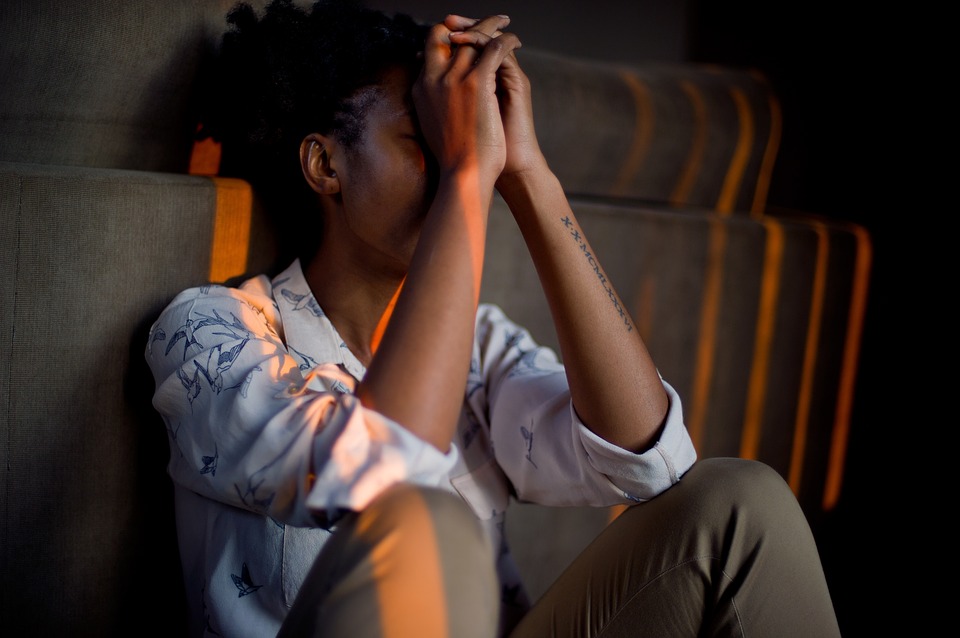
Often, a break up will precipitate a bout of depressive feelings. Risks of depression related to a break up include intrusive thoughts, the difficulty of controlling those thoughts and trouble sleeping. As many as 43% of students experience insomnia in the months after a breakup. Students that are most likely to become distressed after a breakup experienced neglect or abuse during childhood and had an insecure attachment style, felt more betrayed and were more unprepared for the breakup. Fortunately, the best therapy for depression precipitated by a break up is time. Cognitive behavioral therapy, interpersonal therapy, and especially complicated grief therapy also have high success rates for helping to heal a broken heart.
It can be
hard to open up, especially when you are feeling depressed, ashamed or
worthless. It is important to remember that many people struggle with feelings
like these at one time or another. They don’t mean one is weak, fundamentally
flawed, or no good. Accepting your feeling and opening up about them with
someone you trust will help you feel less alone. Even though it may not feel
like it at the moment, people do love and care about you. If you can muster the
courage to talk about your depression, it can and will be resolved. Some people
think that talking about sad feelings will make them worse, but the opposite is
almost always true. It is very helpful to share your worries with someone who
will listen and care about what you say. They don’t need to be able to “fix”
you, they just need to be good listeners.
The best
treatments for varsity students with depression are usually a combination of
antidepressant medications and talk therapies such as cognitive behavioral
therapy and interpersonal psychotherapy. Depressed students are also more
likely to benefit from exercise, eating a healthy diet, and getting enough rest
than many other groups.
CAPE TOWN, SOUTH AFRICA AUGUST 01 2018: (SOUTH AFRICA OUT) Women picket during the #TotalShutDown march against gender-based violence on August 01, 2018 in Cape Town, South Africa. (Photo by Brenton Geach/Gallo Images/Getty Images)
In 2016, there were numerous protests around the country, of many which concerned sexual violence on campuses at Higher Education Institutions, once again brought the issue of gender-based violence. Sexual violence on campuses in South Africa has been a long-standing issue. We are becoming more aware of GBV at Higher Education Institutions in South Africa, but there is a lack of nationally representative research which can give us a clearer understanding of the nature and extent of this phenomenon.
This paper addresses the nature of
GBV and its policy at the Nelson Mandela University, the protective factors
against GBV on campuses, the entry-points for addressing GBV as well as the
challenges in addressing it. The
under-reporting of sexual violence makes it difficult to determine the true
prevalence of the different forms of it at this institution. Owing to
under-reporting and consequently low numbers of officially reported incidents
of sexual violence, the NMU may perceive that sexual violence is not a major
issue at their institution and consequently argue that it does not require a concerted
institutional response.
As indicated by the NMU policy, rape, just as
sexual assault is the quickest developing wrongdoing, yet it gets minimal
supportive consideration by media, teachers or legislators. Since assaults are
typically unreported, no one knows precisely what number of happen every year.
Despite the fact that there is thoughtfulness regarding assault, quiet
challenges and there are successful types of helping survivors. Open
mindfulness is improving and survivors are discovering preferable assistance
today over in the previous years. Most resources to help sexually assaulted
survivors come from crisis centers, police stations, and specialized counseling
programs. Sexual assault does not only affect the victim but also her family,
friends and other loved ones.
There is a lack of effective policies
and structures to prevent and respond to GBV and they are a key to risk factors
to GBV in the institution. However, NMU isn’t the only institution in South
Africa that has policies addressing GBV, especially policies that concern
sexual harassment. Among the institutions which do have GBV policies, these
policies vary between different institutions. In institutions such as NMU where
these policies exist, the policies are not always up to date with current
legislation and best practice. Furthermore, these policies are often not
comprehensive and/or are poorly implemented and consequently do not effectively
address GBV on campus.
In addition, the NMU policy is very
unclear and not easily accessible to the general campus community. Many Higher
Education Institutions also lack the necessary support structure to address and
respond to cases of GBV and/or lack of reporting mechanisms for survivors.
There is a consequent of the gaps in policies and structures to prevent and
respond to GBV, few victims or survivors report their victimization and seek
assistance. When students and staff do not have a clear understanding of what
constitutes GBV and/or the South African legislation addressing and prohibiting
it, they may perpetuate these incidents without even realizing that what they
are doing is against the law.
The NMU policy expresses that
spouses, boyfriends, fathers, siblings and other males can be significant in a
woman’s recuperation from any sexual violence. Half of the women who ever report
their sexual brutality turn to a male as their first wellspring of trust, help,
and guidance. Helping men comprehend assault is basic to helping unfortunate casualties
recoup from assault. Volunteers are rare and desperately needed in this
institution, men in particular. Men are seeking to help and guide the next
generation of young males. With that being said, students need to write to
Oklahoma representative and District Attorneys for any questions about why Oklahoma
continues to cut funds for teen mental health, sexual assault crisis programs,
rape prevention education and other programs that serve victims of trauma. The
Oklahoma Coalition against Domestic and Sexual Assault (OCADVSA.org) can help
and direct you to the rape crisis agency.
In NMU’s policy, there is victim
blaming and question formulation. Victim-blaming can be defined as holding the
belief or expressing one’s opinion that the person who is alleging they were
sexually harassed, sexually assaulted or victimized in an intimate relationship
was in some way responsible for what happened. Victim-blaming can be both
obvious and subtle. Subtle victim-blaming occurs in the way questions are asked
of a person who has been sexually harassed, sexually assaulted or victimized.
Victim-blaming shouldn’t even exist. It exists because it is tied to myths
people hold about sexual harassment, sexual assault, gender-based harassment,
stalking and intimate partner violence. Being aware of the myths associated
with misconduct, particularly gender-based harassment and violence, is an
important step in understanding if a question might be victim blaming.
When reporting the rape, there is no
time limit or laying a charge. However, the sooner this is done, the easier it
is to get the evidence needed for the court case. Delays in reporting may not
be used against the victim in court, but forensic evidence such as physical
evidence, it can be semen and hairs left in the victim’s body after the rape
may be lost. It is preferable to go to the police station nearest to where the
rape has taken place. The victim should receive medical attention soon after
the sexual violence, even if the victim is not bleeding. Also, given the ARV
requirements to prevent HIV, all rape survivors should be seen as potentially
fatally injured even if not bleeding. The sooner the victim receives ARVs, the
less likely it is that HIV infection will occur. One needs to be aware of the
serious side effects this medication can have.
In order to decrease incidents of GBV
while concurrently increasing the number of survivors seeking assistance,
interventions to prevent and respond to GBV must be clearly developed and
pathways to seek assistance must be clear and uncomplicated. Conversely, where
comprehensive policies and structures are developed, which are supportive and
survivor-centered, there is likely to be an increase in survivors reporting
incidents and seeking assistance. Lack of clear, up to date, comprehensive
policies and structures to address GBV, not only negatively impacts on
help-seeking among survivors but it increases the likelihood of perpetration of
GBV with impunity.
Patriarchal and hegemonic masculine
norms are so embedded across race and class groups within this institution,
these acts of GBV are often not even perceived as violence. This once again
points to the very real need for sustained and multi-faceted campaigns and
strategies to challenge these norms and attitudes. On the other hand, other
individuals may understand that what they are doing constitutes GBV but owing
to lax institutional policies and structures addressing GBV, they are happy to
perpetuate these acts because they do not fear reprisal. In other words, if
institutional policies to address GBV lack clarity and if response structures
are complex and poorly understood, individuals are more likely to perpetrate
incidents because they do not fear reprisal or any significant reprisal at
that.
The experience of GBV on campus can
have multiple short and long-term negative consequences for survivors. Firstly,
there are often emotional and psychological consequences of GBV victimization.
The trauma and fear can result in heightened anxiety, low self-esteem, somatic
symptoms, and decreased concentration and productivity. With regard to sexual
violence, sexual assault victims are at risk of suffering from depression,
struggling with suicidal ideation and using and abusing substances. Substance
abuse can be viewed as a form of self-medicating, a means of trying to numb the
pain and move on. Additionally, many survivors suffer academically, in some
cases this can lead them to have to take a leave of absence and for some, it
can result in them dropping out of university.
The efficacy of
policies to address GBV depends on a range of factors. An integrated approach
is needed that addresses both the individual and structural factors that
underlie this phenomenon. While currently there is no sing overarching policy
to address GBV at Higher Education Institutions in South Africa, a national
policy and strategic framework are being developed. GBV at NMU is a very
complex phenomenon. It requires a long-term, societal approach.
Communities face
the harsh realities of unemployment, teen pregnancy, substance abuse and
others. Young people say it’s because they have few opportunities open to them.
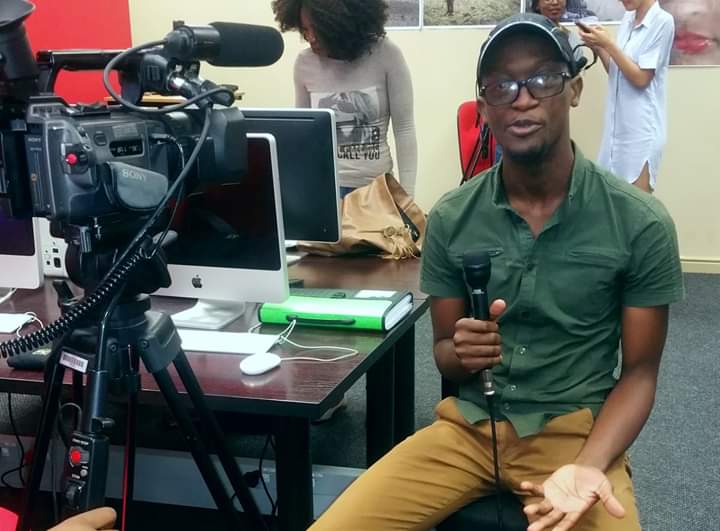
Lwahluma Zokufa
is a graduate in Versatile Broadcasting from Walter Sisulu University. His
experience includes running small businesses. One of these is Echo Plastic
Processors, a recycling company which Zokufa manages while he is studying. Yes,
he can and does work and study all at the same time. It’s hard, but you can
juggle commitments if you are passionate and not afraid of hard work. He has
various experiences in the recycling sector through his dealings with different
companies focusing on the recovery of recyclable waste through buy back
centres. He is currently completing his National Diploma in Journalism at
Walter Sisulu University.
Zokufa, is
originally from Somerset East, he believes that the biggest concern among the
youth of today is education. The biggest struggle in Zokufa’s community,
especially for young ambitious people, is accessing information. “I believe the
education system needs to change in South Africa,” Zokufa said. “There’s a lack
of self-education. It needs to start at classroom level, to teach young people
that one needs more than just formal education to make a success of their
lives. In my community, that would make a difference.” Zokufa believes that
creating opportunities is also about working hard and putting your best foot
forward in everything you do. “It’s about investing your time now to get
returns in the future.” The WSU graduate, is very passionate about education
and youth development. As a result, he is a co-founder of an organization
called Blue Crane Youth Development which helps student’s access higher
education. He is the marketing and communication director of the organization.
After passing
matric in Port Elizabeth Zokufa decided to take a gap year to decide on what he
wants to study and then two years later he started a company called Lihlumile
Developments Consultants in 2009 in Pietermaritzburg which is mainly focused on
supplying stationary and he later became a business consultant. In 2010, this
young man moved to East London and continued to supply his stationary. Zokufa
benefited a lot from during the 2010 Soccer World Cup.
Later in 2014,
Zokufa met Leon Van der Waat who is a businessman that owns a company called
Cannibal Glass Recycling. The business owner introduced him to recycling and
waste management and he taught him everything he knows about the business.
Zokufa learnt so much more from this businessman as a result, he started his
second company with Mawanda Blouw and Khayalethu Pikolo his friends, the
company is called Green Waste Solutions. “Working with friends has its
challenges as well as it has its benefits, my friends and I had a good working
relationship and we still do” he said.
Zokufa has many
businesses, one would find it hard to believe that he is a student. In 2018, he
moved on to start another company called Echo Plastic Processors which deals
with processing the waste collected such as glass, paper, plastic, cardboard
and can. Echo Plastic Processors is a 100% black owned recycling company that
was established by him and Khayalethu Pikolo two previously disadvantaged black
men that identified an opportunity in the waste management and recycling
industry. The company produces food packaging, shopping bags, refuse bags,
clear plastic bags, wood bags, PET bottles and more.
The demand for
recycled products continues to grow and new markets are developing that allow
the efficient segregation and reprocessing of high purity resins. Improved
quality resins, greater environmental awareness and higher prices for virgin
resins contributing to growth. Manufactures of goods are dramatically
increasing their use of recycled inputs in their production processes. In line
with the National Waste Management Strategy, Echo Plastic Processors seeks to
implement measures to strengthen and expand the waste economy so that it can
generate and sustain jobs as well as to formalize existing jobs in the waste
economy.
The mission of
Echo Plastic Processors is to be a model of environmental through programmes
that maximize waste reduction, ecological sustainability, promote recycling and
production of products from recyclable materials. Their mission is to achieve
100% customer satisfaction by delivery quality products and services at an
affordable price. Their forward vision is to strive to become an entity in the
packaging industry, capable of demanding unconditional response from the
targeted niche. The company is growing and would always like to remain on the
growing streak.
2018 was a very
busy year for Zokufa. He managed to start two companies. Starting a business
seems to be in his blood. The second company he started last year (2018) is the
LLK Energy Solutions which deals with supplying fuel, coal, chrome etc. Zokufa
also started this company with Khayalethu and Lwando Mqaqa.
Zokufa, takes
every opportunity that comes up, he is not afraid to work hard. The definition
of a hard worker is him. He is an inspiration as there are not many young black
students who have businesses on the side. He is able to give back to the
community and still provide jobs for people. Zokufa, makes it work by simply
cutting down in social life activities to achieve the bigger goal. I believe we
can a lot from him. I know not all of us can run and manage a business but we
can find other ways to make money on the side.








 The Golden-Girl Blog